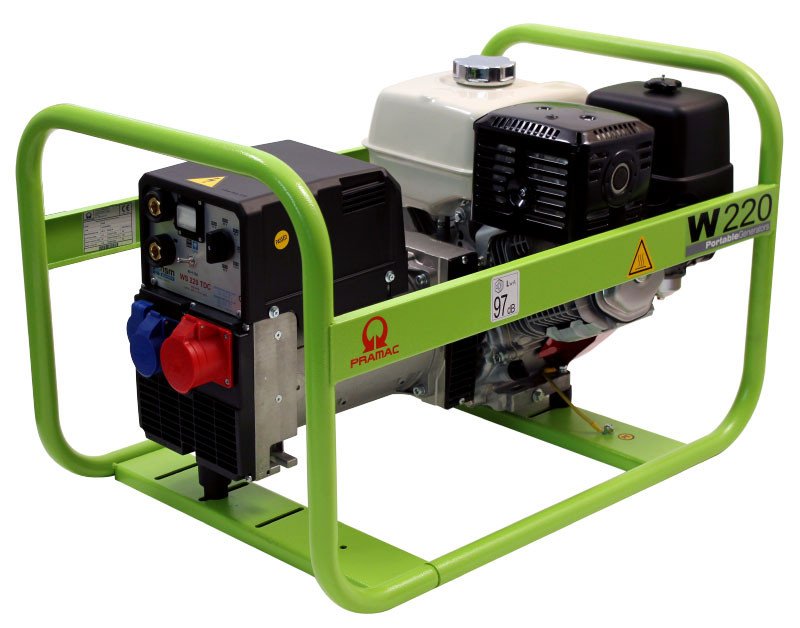
Imagine you’re on a remote construction site, miles from the nearest power grid, or perhaps undertaking urgent repairs after a storm. You need to weld a critical structural component, but also power lights, tools, and communications. This isn't a job for just any power source. This is where the specialized world of Types & Technology of Welding Generators steps in, offering a robust, autonomous solution that’s far more than just a typical power supply. It’s an indispensable partner for professionals who need both electricity and welding capabilities, without compromise.
At a Glance: What You’ll Discover
- Welding Generators vs. Standard Generators: Key differences in function, output, and design.
- Core Types Explored: Understanding AC, DC, and advanced Inverter welding generators.
- Mobility Meets Might: The distinction between portable and industrial models.
- Technological Leaps: How modern innovations boost efficiency, precision, and safety.
- Choosing Your Champion: Practical, actionable advice for selecting the right generator for your project.
More Than Just Power: Understanding the Welding Generator
At its heart, a welding generator is a marvel of electromechanical engineering, designed to power welding operations while simultaneously offering general electricity for other tools and devices. Think of it as a power plant and a welding machine rolled into one rugged, often portable, unit. It achieves this by pairing an internal combustion engine (fueled by gasoline or diesel) with an electric alternator. This inherent self-sufficiency makes it invaluable in environments where grid power is either non-existent, unreliable, or simply too far away.
Industries like construction, mining, agricultural repair, and heavy industrial maintenance rely heavily on these versatile machines. Unlike a conventional welding machine that requires an external power source, a welding generator carries its own, offering true operational independence.
Why a Welding Generator Might Be Your Best Friend
When the job takes you off the beaten path, a specialized welding generator offers unique advantages:
- Dual-Threat Versatility: This isn't a one-trick pony. It provides robust welding power for fabrication or repairs and simultaneously supplies auxiliary power for grinders, lighting, or other crucial tools. It means fewer pieces of equipment to transport and manage on site.
- Unrivaled Mobility: Designed with portability in mind, many welding generators are compact, fitted with wheels or lifting points, making them ideal for transport across varied terrains and into challenging workspaces.
- Built for Battle: These machines are engineered for durability. They withstand the rigors of intense welding processes, the dust and grime of construction sites, and the general abuse of demanding outdoor environments.
- Arc Stability and Precision: High-quality welding generators deliver a remarkably stable power output, crucial for consistent arc quality. This minimizes current fluctuations, a vital factor for precision welding processes like TIG or MIG, ensuring cleaner, stronger welds.
The Downside: Weighing the Trade-offs
While indispensable, welding generators do come with a few considerations:
- Potential for Accelerated Wear: Using one machine for two demanding tasks can, over time, lead to faster wear and tear on components. This necessitates diligent and consistent maintenance to maximize its lifespan.
- Higher Upfront Investment: Due to their specialized design, robust construction, and dual functionality, welding generators typically command a higher initial purchase price compared to a standard generator or a simple standalone welding machine.
Where These Workhorses Shine: Common Use Cases
Welding generators are the unsung heroes behind countless vital operations:
- Active Construction Zones: From structural steel erection to pipefitting, they provide power for both welding and general site operations, often moving with the project as it progresses.
- Remote Equipment Repair: Whether it's a broken excavator bucket on a farm or a crucial pipeline repair in the wilderness, welding generators enable on-the-spot fixes, minimizing downtime and transport costs.
- Emergency & Disaster Response: In the aftermath of natural disasters, they are crucial for both powering essential services and facilitating rapid repairs to infrastructure, vehicles, and temporary shelters.
- Mobile Fabrication Shops: Many specialized vehicles are outfitted with welding generators, turning vans or trailers into fully autonomous mobile workshops for custom fabrication or repair services.
The Fundamental Divide: Welding Generators vs. Standard Generators
While both types convert mechanical energy into electrical power, their core purpose dictates vastly different design philosophies and performance characteristics. Understanding these distinctions is critical for making an informed choice.
Think of it this way: a standard generator is a general-purpose utility vehicle, excellent for hauling groceries or furniture. A welding generator is a specialized off-road vehicle, designed for rugged terrain and specific tasks.
| Feature | Standard Generators | Welding Generators |
|---|---|---|
| Primary Function | General power supply for electrical devices, backup. | Power for welding operations, often includes welding equipment. |
| Power Output/Voltage | Higher voltages (120V/240V AC) for a wide range of appliances. | Lower overall power output, high current at low voltages (typically < 100V) for welding. |
| Output Current Type | Primarily Alternating Current (AC). | Primarily Direct Current (DC) for most welding rods; many offer both AC/DC. |
| Fuel Efficiency | Designed for fuel efficiency and extended run times, often with "eco" modes. | Fuel efficiency is secondary to delivering consistent, high welding current. |
| Portability/Design | Can range from small portable units to large, stationary industrial models. | Prioritizes portability, compact, and robust design for field work. |
| Control Panel | Focuses on power output management, fuel levels, safety indicators. | Includes standard features plus controls for welding current (amperage), AC/DC output selection, and welding accessories. |
| Application Range | Homes, events, emergency services, general backup. | Construction, shipbuilding, pipeline industries, field repairs (off-grid welding), mobile workshops. |
| Elaborating on the Differences: |
- Power Output Nuances: A standard generator focuses on delivering a steady voltage to run sensitive electronics or high-power tools. A welding generator prioritizes high amperage at lower voltages, which is the specific demand of creating and sustaining an arc for welding. This high current capability is what differentiates it.
- Current Type Matters: Most modern welding processes benefit immensely from Direct Current (DC), which provides a smoother, more stable arc, better penetration, and reduced spatter. While some basic welding can be done with AC, DC is king for quality and versatility. Standard generators, on the other hand, almost universally output AC power to match typical household and industrial appliances.
- Fuel Economy vs. Raw Power: When you need to run a refrigerator for days during an outage, fuel efficiency is paramount in a standard generator. For a welding generator, the priority shifts to delivering instantaneous, high current reliably, even if it means consuming more fuel per hour of operation.
Diving Deep: The Types of Welding Generators
The evolution of welding generators has been driven by the need for greater control, efficiency, and adaptability. Understanding the fundamental types helps you match the right machine to the job.
1. Alternating Current (AC) Welding Generators
These are the simplest and often most affordable welding generators. They produce AC output, which is suitable for basic stick welding (SMAW) applications, particularly with certain types of electrodes (e.g., E6011, E6013).
- Pros: Generally less expensive, simpler internal design, good for basic carbon steel welding.
- Cons: Arc can be less stable and harder to control, more spatter, not ideal for precision work or non-ferrous metals like aluminum (unless combined with specific AC TIG capabilities, which are rare in basic generator models).
2. Direct Current (DC) Welding Generators
Representing a significant step up from AC, DC welding generators convert the engine's mechanical energy into a constant, unidirectional electric current. This provides a far more stable and controllable arc, making them suitable for a broader range of welding processes and materials.
- Pros: Superior arc stability, reduced spatter, better arc penetration, excellent for out-of-position welding, preferred for most stick electrodes (E7018) and essential for processes like TIG and MIG (when equipped with the right welding components). Offers high-quality results.
- Cons: Generally more complex and expensive than basic AC models, potentially less energy efficient than inverter types.
3. Inverter Welding Generators: The Modern Powerhouse
Inverter technology is arguably the biggest leap in welding generator design. These units use advanced electronics (rectifiers and inverters) to convert the raw AC power from the alternator into high-frequency AC, then rectify it to DC, and finally "invert" it back into precisely controlled AC or DC welding output. This complex dance of electricity allows for incredibly fine-tuned control over the welding arc.
- Pros:
- Unmatched Efficiency: Can offer up to a 40% reduction in fuel consumption compared to traditional models, significantly lowering operating costs.
- Compact & Portable: The advanced electronics drastically reduce the size and weight, making them exceptionally portable.
- Superior Arc Control: Digital controls allow for precise adjustment of welding parameters, leading to incredibly stable arcs, minimal spatter, and high-quality welds across various materials and processes (stick, TIG, MIG).
- Multi-Process Capable: Many inverter generators are truly multi-process, supporting Stick, TIG, and MIG welding with simple adjustments.
- Quieter Operation: Often operate at lower RPMs and feature advanced noise reduction.
- Cons: Higher initial cost, more complex electronics mean specialized maintenance may be required, and they can be more susceptible to dust and moisture if not properly designed for rugged environments.
4. Portable Welding Generators
These machines are built with field mobility as their primary design consideration. Combining power autonomy with ease of transport, they are perfect for technicians who move from one job site to another.
- Characteristics: Typically lighter, often feature wheels and handles, and have capacities suitable for light to medium-duty welding tasks.
- Best For: Vehicle repairs, small construction projects, agricultural maintenance, and general field service in remote or difficult-to-access areas.
- Considerations: While mobile, they may have lower continuous power output and durability compared to their industrial counterparts.
5. Industrial Welding Generators
When the job demands relentless, heavy-duty performance, industrial welding generators are the answer. These are engineered for continuous operation in the most punishing environments.
- Characteristics: Feature robust, often liquid-cooled engines, heavy-duty alternators, advanced cooling systems, and sturdy frames. They provide high power output and exceptional endurance for intensive, long-duration projects.
- Best For: Large-scale construction, pipeline welding, shipbuilding, mining operations, and large fabrication shops that require continuous, high-amperage welding.
- Considerations: Less portable due to their size and weight, higher initial investment, but offer unparalleled power, reliability, and lifespan for demanding applications.
The Journey of Power: Technological Evolution in Welding Generators
The story of welding generators is one of continuous refinement, driven by the quest for better welds, greater efficiency, and enhanced operator safety. Early models were rudimentary AC units, providing basic arc power sufficient for simple stick welding. The introduction of DC output marked a significant leap, offering vastly improved arc quality, better control, and the ability to weld a wider range of materials and in more challenging positions.
However, the real revolution arrived with inverter technology. This wasn't just an incremental improvement; it was a paradigm shift. Inverter units dramatically shrunk the physical footprint and weight of welding generators, making true portability a reality without sacrificing power. More importantly, the digital control afforded by inverters allowed for unprecedented precision over the welding arc. This meant:
- Finer Parameter Control: Welders could dial in exact amperage, voltage, and even wave forms, opening doors to highly specialized welding applications (e.g., pulsed TIG for thin materials).
- Increased Energy Efficiency: Less wasted power meant significant fuel savings and reduced operating costs over the generator's lifetime.
- Enhanced Operator Experience: Smoother arc starts, less spatter, and more consistent welds translated into less fatigue and higher quality output for the welder.
- Expanded Applications: From the precision demands of aeronautics to the heavy-duty requirements of pipeline construction, inverter welding generators became the go-to for professionals.
This evolution hasn't just been about performance; it's also about safety and environmental impact. Modern generators often feature advanced engine technologies that reduce emissions and noise, contributing to healthier work environments and meeting increasingly stringent regulations.
Making the Right Choice: Your Actionable Guide to Selecting a Welding Generator
Choosing the perfect welding generator isn't a one-size-fits-all decision. It requires a thoughtful evaluation of your specific needs, project scope, and operational environment. Here’s how to approach it:
1. Assess Your Core Power Requirements
Before anything else, clarify your primary need:
- For pure welding power in isolated settings (low voltage, high current): A welding generator is your clear choice. It’s built for this specific demand.
- For powering general electronics (residential, events, emergency backup) requiring higher voltages: You'll need a standard generator. Don't try to force a welding generator into this role, as its output characteristics are not ideal for general appliances.
2. Project Scale and Current Demands
Consider the magnitude of your typical projects:
- High-Amperage Welding Across Various Job Sites: You'll need a robust, often portable, welding generator with sufficient amperage output for your heaviest welding tasks. Look at the maximum continuous amperage it can deliver.
- Smaller Home or Workshop Welding: A more compact, possibly lighter-duty welding generator might suffice. Match the amperage range to the electrodes or wire sizes you typically use.
- Large-Scale Industrial Projects or Whole-House Backup: This will demand a powerful, potentially industrial-grade welding generator for continuous high-amp welding, or a substantial, possibly stationary, standard generator for comprehensive power backup.
3. Welding Type and Precision Needs
The specific welding processes you employ will heavily influence your choice:
- Basic Stick Welding (SMAW): An AC welding generator can handle this for general fabrication and repair, especially with compatible electrodes.
- High-Quality, Precise Welding (TIG, MIG), Reduced Spatter, Out-of-Position Work, or Exotic Materials: A DC welding generator is essential. The stable arc and better control are non-negotiable for these applications.
- Advanced Applications Demanding Peak Efficiency, Portability, and Superior Arc Control: An inverter welding generator is the front-runner. Its ability to fine-tune parameters makes it ideal for critical welds and multi-process versatility. If you need to Explore our welding generators for diverse tasks, an inverter model often offers the best flexibility.
4. Portability Matters: Where Will You Work?
Your operational environment dictates how portable your generator needs to be:
- Frequent Transport and Remote Work: Prioritize lightweight, compact portable welding generators or, ideally, inverter welding generators. Their design makes them easy to load, unload, and maneuver across job sites.
- Stationary or Infrequent Movement: An industrial welding generator might be acceptable if it primarily stays in one location or is moved by heavy equipment.
5. Maintenance & Longevity Expectations
Every generator requires maintenance, but the type affects complexity and cost:
- Simpler Models (AC/DC): Generally have fewer complex electronic components, potentially leading to easier and less specialized maintenance.
- Inverter Models: While highly efficient, their advanced electronics may require specialized diagnostics and parts, which can be more expensive. Factor in the availability of parts and service in your area. Regular checks, oil changes, and filter replacements are universal.
6. Cost vs. Value: Initial Investment vs. Long-Term Savings
Budget is always a factor, but look beyond the sticker price:
- Initial Cost: Standard generators often have a lower entry point. Basic AC welding generators are also less expensive. High-end inverter welding generators or robust industrial models will have a higher upfront cost.
- Operating Costs: Consider fuel efficiency. Inverter models, despite their higher initial cost, often offer substantial fuel savings over their lifetime, leading to a lower total cost of ownership.
- Resale Value: Quality, well-maintained welding generators, especially inverter models, tend to hold their value well.
7. Noise Level: Consider Your Operating Environment
Generators can be noisy, but some are more so than others:
- Residential or Public-Facing Areas: Look for standard generators or inverter welding generators that emphasize noise reduction features.
- Industrial or Remote Settings: Noise might be less of a critical factor, but prolonged exposure still impacts operator comfort and safety. Some modern units incorporate acoustic dampening.
Equipping Yourself for Success
The landscape of welding generators offers powerful, versatile solutions for almost any project, no matter how remote or demanding. By carefully evaluating your welding processes, required power output, portability needs, and long-term operating costs, you can confidently select a generator that not only meets but exceeds your expectations. Choosing the right machine is an investment in efficiency, quality, and operational independence, ensuring you’re always powered up and ready to tackle the next challenge.