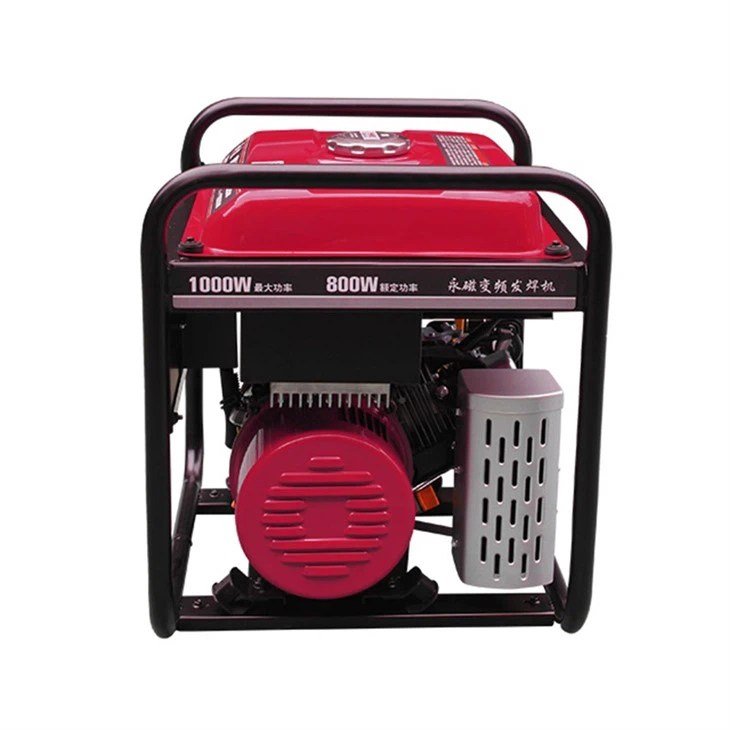
When the job site takes you far from the nearest outlet, your power source can't be an afterthought. For countless contractors, pipeliners, and repair crews tackling outdoor or remote work, an engine-driven welder generator isn't just a convenience – it's the lifeline that keeps projects moving. These ingenious machines seamlessly integrate a powerful welder with a robust generator, often featuring independent power outputs to ensure your arc quality remains pristine, even when other tools are humming along. Finding the right fit among the Top Welding Generator Brands & Reviews is crucial, and it's about far more than just raw power. It's about reliability, efficiency, and matching the machine to your specific demands.
At a Glance: Your Quick Guide to Welding Generators
- Essential for Off-Grid Work: Perfect for remote job sites, field repairs, and anywhere conventional power is unavailable.
- Combo Advantage: Delivers "clean" power specifically tuned for welding, often outperforming regular generators trying to run a separate welder.
- Power Output Matters: Match the generator's wattage and welding amperage to your project needs – insufficient power means poor welds.
- Inverter Tech is Key: Offers lighter weight, better fuel efficiency, and a stable, high-quality arc, especially crucial for sensitive processes like TIG.
- Top Brands Reviewed: Lincoln Electric, Hobart, Klutch, Miller, ESAB, and TOMAHAWK lead the pack with diverse offerings.
- Consider Portability & Run Time: Crucial for mobility and sustained productivity on long days.
- Safety First: Look for overload protection, low oil shutdown, and robust circuit breakers.
Why an Engine-Driven Welder Generator is Your Job Site MVP
Imagine you're on a pipeline deep in the backcountry, fabricating a critical connection. Or perhaps you're a mobile repair specialist, responding to an urgent structural fix on a remote farm. In these scenarios, lugging separate generators and welders, dealing with tangled cables, and hoping for stable power just isn't feasible. That's precisely where engine-driven welder generators shine.
These all-in-one units are engineered to provide both the precise, stable current a welder demands and auxiliary power for grinders, lights, and other essential tools. Their integrated design ensures that the welding performance isn't compromised, offering a singular, reliable power hub wherever your work takes you. This not only streamlines your equipment but also boosts efficiency and safety on site.
Deciphering Your Options: Welder Generator Combo vs. Regular Generator vs. Plug-In Welder
Before diving into specific models, let's clarify the playing field. Understanding the fundamental differences between these power solutions will guide you toward the best choice for your unique needs.
Engine-Driven Welder vs. Plug-In Welder: The Great Divide
The core distinction lies in portability and power source.
- Engine-Driven Welders: These are your go-anywhere workhorses. Their primary advantage is self-sufficiency, making them indispensable for fieldwork, construction sites without established power, or any outdoor repair. Many also offer separate power outlets, making them a multi-purpose power station for other tools. While robust, they typically have a maximum amperage in the 225-250 amp range and duty cycles up to 60%, ideal for most field applications but less for extremely thick, continuous industrial work.
- Plug-In Welders: Tied to a grid power source, these machines are typically found in shops, garages, or industrial facilities. Their strength lies in raw power and duty cycle. High-end plug-in welders can easily exceed 500 amps and offer 100% duty cycles, allowing for continuous, heavy-duty welding on thick materials. They often support multi-process welding (MIG, TIG, Stick, Flux-Cored) with advanced features and precise controls. While initially cheaper, their lack of portability can be a significant limitation for mobile operations.
Modern advancements have blurred the lines a bit; some engine-driven welders (like the Miller Fusion 160) now boast "Power Shift technology," allowing them to run their welding function from either the generator or utility power, offering the best of both worlds. Still, for comprehensive knowledge, you might want to check out a comprehensive guide to welding generators for a deeper dive into their overall capabilities.
Welder Generator Combo vs. Regular Generator: More Than Just Power Output
This comparison is crucial for anyone considering running a separate plug-in welder off a regular generator.
- Welder Generator Combos: These units are purpose-built. They feature a dedicated welding output designed to produce "clean" power with a stable voltage and current, which is absolutely essential for a smooth, consistent arc. While their total auxiliary power output might seem lower than a standalone generator, that's because a significant portion of their engine's capacity is reserved for welding performance, ensuring quality results.
- Regular Generators: While capable of producing electricity, most standard generators are not designed with welding in mind. Their power output, particularly for larger models (often >10 kW), might be substantial, but the quality of the electricity ("dirty" power with voltage fluctuations) can lead to inconsistent welding results, difficult arc starts, and premature wear on a connected welding machine. They are primarily designed to power general tools and appliances, not demanding, precise welding operations.
For critical welding applications, investing in a true welder generator combo is almost always the smarter, more reliable choice.
Your Blueprint for Choosing: Key Factors to Consider
Selecting the right welding generator means understanding how various features align with your work. Here's what to keep in mind:
Power Output: The Heart of Your Operation
This is arguably the most critical factor. A generator's wattage (for auxiliary power) and the welder's amperage (for welding) must match your requirements. Industrial welders often need 5,000 to 12,000 watts of auxiliary power. Insufficient power output directly translates to poor weld quality, inadequate penetration, and slower work. Always check both the continuous and surge wattage. Surge capacity, the ability to handle short bursts of high demand (like when you strike an arc or start a grinder), should ideally be at least 1.5 times your welder's running wattage.
Fuel Type: Efficiency, Durability, and Cost
The engine's fuel source impacts everything from running costs to maintenance and startup.
- Gasoline: Often the lowest initial cost, easy to start in cold weather, and good for light to medium-duty, intermittent use. However, gasoline engines are generally less fuel-efficient, consuming up to 20% more fuel than comparable diesel models.
- Diesel: The workhorse for heavy-duty, continuous applications. Diesel engines boast superior fuel efficiency (40-50% efficiency), longer lifespan, and greater durability. They also offer higher torque, which can be beneficial for consistent welding performance.
- Natural Gas: An environmentally friendly option with lower operating costs if you have access to a natural gas line. Offers up to 45% efficiency for continuous operation but is less portable.
- Propane: Provides cleaner combustion than gasoline, easier storage (especially for extended periods), and moderate efficiency (32-38%). It's a popular choice for quieter operation and reduced emissions.
Portability: Your Freedom to Move
For field welders, portability is non-negotiable. Lighter units, especially those under 100 pounds for contractors, with integrated handles or robust wheel kits, are essential for easily moving the machine across diverse terrain. Consider the overall footprint and how easily it loads onto a truck.
Run Time: Maximizing Productivity
A generator with a substantial fuel tank and good fuel efficiency can offer 6 to 12 hours of run time, significantly boosting productivity by reducing the frequency of refueling. This is crucial for long days on remote job sites where fuel resupply might be challenging.
Noise Level: A Quieter Work Environment
Operating in residential areas or for extended periods, a quieter generator (ideally below 60 dB) can make a huge difference in worker comfort and compliance with local noise ordinances. Inverter technology often contributes to quieter operation.
Safety Features: Non-Negotiable Protection
Prioritizing safety means looking for:
- Overload Protection: Automatically shuts down the unit if current draw exceeds safe limits.
- Low Oil Shutdown: Protects the engine from severe damage due to insufficient lubrication.
- Circuit Breakers: Essential for preventing electrical fires and damage from short circuits.
- GFCI Outlets: Ground Fault Circuit Interrupter outlets are crucial for protecting operators from electrical shock, especially in damp or outdoor conditions.
These features not only ensure compliance with OSHA standards but also protect your investment and, most importantly, the operator.
Price and Warranty: An Investment in Reliability
While budget is always a factor, remember that a higher initial price often corresponds to advanced features, superior durability, and enhanced performance. A strong warranty (typically 2-5 years for the welder, 2-3 years for the engine) signals manufacturer confidence in their product's longevity and provides peace of mind.
Beyond the Basics: Features That Truly Make a Difference
Certain technologies and design philosophies elevate a good welding generator to a great one.
Reliability and Durability: Built for the Grind
A welding generator is an investment. You need a machine that can withstand the rigors of job site abuse, perform consistently day after day, and require minimal downtime for repairs. Look for sturdy frames, high-quality engine components, and robust construction.
Versatility: Multi-Process Support
Many modern welding generators can do more than just Stick welding. Support for multiple processes (MIG, TIG, Flux-Cored) expands your capabilities, allowing you to tackle a wider range of materials and applications without needing separate machines. Adjustable voltage and current settings are key here.
Fuel Efficiency and The Inverter Advantage
Modern inverter technology is a game-changer for welding generators.
- How it Works: Inverter welders convert AC power to DC, then use electronic components to chop and filter it, creating high-frequency AC that is then rectified back to smooth DC.
- Benefits: This results in a much more stable and precise arc, leading to better penetration, smoother welds, and significantly less spatter. Inverters are also considerably lighter and more compact than traditional transformer-based welders, boosting portability. They also improve fuel efficiency by only drawing the power needed, extending run times.
User-Friendly Controls: Intuitive Operation
Clear digital displays, logically labeled controls, and ergonomic design make a big difference in the field. Easy access to settings for amperage, voltage, and process selection minimizes setup time and reduces the chance of errors.
Robust Safety Systems: More Than Just the Basics
Beyond the essential safety features, look for advanced voltage regulation (AVR) to maintain consistent electrical output, thermal sensors for automatic shutdown during overheating, and advanced grounding systems for comprehensive electrical shock protection.
Deep Dive: Top Welding Generator Brands & Reviews
Now, let's explore some of the leading models that stand out in the market, based on their capabilities and features.
Lincoln Electric Eagle 10.000 Plus
- Power & Performance: A powerhouse designed for serious work. It delivers 9000 W continuous and 10,500 W surge power, making it capable of running more than just the welder. Its high generator output means you can plug in separate MIG or TIG units, effectively turning it into a multi-process hub on site.
- Engine & Fuel: Equipped with a robust 23 HP Kohler gasoline engine and a large 12-gallon fuel tank, providing ample run time (approx. 1.5 gal/hour at 210 amps DC).
- Welding Capacity: Primarily a Stick welder, offering powerful output.
- Auxiliary Outlets: Offers one 120V/240V receptacle providing 38 amps and two 120V receptacles supplying 40 amps each, enough for heavy-duty tools.
- Maintenance: Requires oil changes every 100 hours and filter changes every 200 hours.
- Weight: At 514 lbs, it's a heavy-duty machine built for sustained performance.
- Verdict: Ideal for contractors who need significant auxiliary power alongside strong stick welding capabilities, effectively creating a mobile fabrication shop.
Hobart Champion 145 Arc Welder/Generator Combo
- Power & Performance: A compact and highly portable option, providing 4,000 W continuous and 4,500 W surge power. It's a user-friendly, robust, and quiet US-made unit.
- Engine & Fuel: Powered by a Briggs & Stratton 305 cc, 10 HP 4-cycle OHV engine with a 6.25-gallon tank. Users often praise its straightforward startup and consistent power.
- Welding Capacity: Features a built-in 145-amp stick welder, capable of handling up to 1/4″ thick metal with a 30% duty cycle at 130 amps. Its 40-145 amp range makes it versatile for various stick electrodes.
- Auxiliary Outlets: Includes one 20 Amp, 240V AC outlet and four 20 Amp, 120V AC GFCI outlets, offering good versatility for tools.
- Weight: Weighing 222 lbs (including running gear), it's reasonably portable for a combo unit.
- Verdict: An excellent choice for light to medium-duty field work, offering solid stick welding performance and reliable auxiliary power in a more portable package.
Klutch 7500K Arc Welder/Generator
- Power & Performance: Delivers 6,000 W continuous and 6,600 W surge power, a strong mid-range option for both welding and powering tools.
- Engine & Fuel: Equipped with a 4-cycle, 14 HP Kohler engine and a 5-gallon fuel tank, providing up to 8 hours of run time.
- Welding Capacity: Its built-in 60–170 A stick welder can handle up to 3/8in. thick steel and other metals, making it quite versatile for various projects.
- Auxiliary Outlets: Offers four 115V, 20 Amp receptacles and one 240V, 30 Amp twist lock receptacle.
- Weight: Weighs 220 lbs and comes with a convenient wheel barrel-style cart for improved portability.
- Warranty: Features a commendable 3-year welder warranty and a 2-year engine warranty.
- Verdict: A reliable, feature-rich option that strikes a good balance between power, portability, and warranty support for general fabrication and repair.
Miller Fusion 160 Generator welder
- Power & Performance: Boasts 6200 W continuous and 6500 W surge power, with the unique "Power Shift technology" allowing its 160-amp inverter stick welder to run from either the generator or 120/240V utility power.
- Engine & Fuel: Powered by a 13.4 HP Kohler engine and a 6.25-gallon fuel tank, providing approximately 7.5 hours of run time at a 3,000 watts continuous load.
- Welding Capacity: A 160-amp inverter stick welder provides a stable and high-quality arc.
- Maintenance: A standout feature is its use of Kohler PRO 10W-50 full synthetic oil, which extends oil change intervals from 100 to an impressive 300 hours, reducing maintenance downtime.
- Weight: Weighs 242 lbs, offering good portability for its capabilities.
- Verdict: An excellent choice for those needing an inverter-quality stick welder with the flexibility to operate both off-grid and on utility power, coupled with reduced maintenance needs.
ESAB Ruffian 150 DC Manual Metal Arc Welder and AC Generator
- Power & Performance: Provides 4,000 W continuous and 4,500 W peak power for auxiliary tools. Its built-in stick welder uses ESAB’s renowned Rogue inverter technology, ensuring precise and stable arc performance.
- Engine & Fuel: Features a robust 14-HP KOHLER Command PRO engine with a 5-gallon tank, offering around 6.5 hours of run time.
- Welding Capacity: Offers 150A at a 60% duty cycle, with adjustable arc force and easy arc start for electrodes up to 5/32-in. diameter. A key feature is that the auxiliary generator output voltage is independent of the welding current, ensuring consistent power for both.
- Weight: Weighs 236 lbs, including running gear and handles, making it relatively portable.
- Verdict: A premium choice for those who prioritize inverter welding quality and precise arc control in a field-ready package, with the added benefit of independent auxiliary power.
TOMAHAWK 15 HP Engine Driven Portable Generator welder
- Power & Performance: While offering a lower 2000 W continuous generator power (the lowest on this list), it compensates with a high 210 A welding output. This unit focuses heavily on welding capability.
- Engine & Fuel: Uses a powerful 15 HP Tomahawk power inverter engine with a substantial 7-gallon tank.
- Welding Capacity: Uniquely, it includes built-in Stick and TIG welder functions with a 60% duty cycle, and comes with both electrode holder and TIG torch, making it highly versatile for its size. The 120A Gasoline Stick & Inverter Generator variant from Tomahawk is also praised by users for its stable sine wave and clean welds, handling up to 3/8-inch steel.
- Auxiliary Outlets: Provides two 120V receptacles.
- Weight: At 202 lbs, it's one of the lightest full-featured welder generators on the list.
- Verdict: An excellent option for those who primarily need strong welding output (especially for TIG) in a highly portable and lightweight package, with basic auxiliary power for lighter tools.
Tailoring Your Power: Generators for Specific Welding Techniques
Different welding processes have distinct power requirements and desired arc characteristics. Your generator choice should complement the techniques you'll be employing most often.
Understanding MIG, TIG, and Stick Welding Characteristics
- Stick Welding (SMAW): The most versatile and portable. Ideal for outdoor use and thicker, often dirty, materials. Equipment is generally the most affordable. It requires a moderate learning curve, produces strong welds, but often requires more cleanup.
- MIG Welding (GMAW): Easiest for beginners, offering faster welding speeds. Best for thin to medium-thick materials, especially steel and aluminum, typically used indoors. Equipment is moderately priced. While portable options exist, the setup with gas tanks can be bulkier than Stick.
- TIG Welding (GTAW): The most challenging to master but produces the highest quality, most precise, and aesthetically pleasing welds. It's suitable for a wide range of metals, including stainless steel and non-ferrous alloys. Equipment is the most expensive and slowest, but the control is unmatched.
Generator Considerations for Each Technique
- For Stick Welding: You'll primarily need robust amperage (e.g., 150-250 amps for common electrodes) and reliable voltage adjustability to control the arc. Engine-driven welders are naturally suited for Stick due to its ruggedness and outdoor applicability. Look for models with good duty cycles for continuous work.
- For MIG Welding: If running an external MIG machine, ensure your generator has sufficient auxiliary power (wattage) to power it. If the generator has a built-in MIG function, stability of power output is key for consistent wire feed and arc.
- For TIG Welding: This process is highly sensitive to power fluctuations. An inverter-based welding generator is almost always preferred for TIG due to its ability to produce a smooth, stable, high-frequency arc. Look for precise current control and, if possible, features like high-frequency start and post-flow gas control (if using an external TIG unit). While TIG generators exist, many prefer to use the generator output to power a dedicated inverter TIG machine for maximum control.
Remember, the right generator can make your chosen welding technique significantly easier and more effective.
Beyond the Spec Sheet: What Real Users Are Saying
While specifications are critical, real-world user experiences often tell the full story. Across various platforms, recurring themes emerge regarding top welding generator brands:
- Reliability & Durability: Users consistently praise machines that start consistently, run smoothly even under heavy loads, and withstand challenging environments. Brands like Lincoln and Miller often receive high marks for their robust construction.
- Welding Performance: The quality and consistency of the arc are paramount. Welders appreciate machines that deliver stable current, easy arc starts, and minimal spatter, especially when dealing with critical welds. ESAB's inverter technology in models like the Ruffian is frequently highlighted for its superior arc characteristics.
- Ease of Use: Simple controls, clear readouts, and easy maintenance access are highly valued. A machine that allows you to quickly dial in settings and focus on the weld rather than fighting the machine is a winner. Hobart units, for instance, are often cited for their user-friendly interfaces.
- Portability: For field operators, the weight and ease of moving the unit are key. Integrated wheels and sturdy handles are a must, and lighter units like the TOMAHAWK are often favored for rapid deployment.
- Fuel Efficiency: Long run times and reduced fuel consumption translate directly into cost savings and fewer interruptions, a benefit frequently mentioned by professional users. Inverter technology, as seen in newer models, plays a significant role here.
These insights underscore that a great welding generator isn't just powerful; it's also dependable, efficient, and a pleasure to operate, ultimately enhancing productivity and the quality of your work.
Your Next Steps: Making an Informed Decision
Choosing the right welding generator is a strategic decision that impacts your productivity, project quality, and bottom line. Armed with detailed Top Welding Generator Brands & Reviews and a comprehensive understanding of what to look for, you're now in a strong position to make an informed choice.
Start by clearly defining your primary use cases:
- Will you mostly be doing heavy-duty Stick welding on pipelines, or lighter fabrication and repair?
- Do you need maximum auxiliary power for a whole suite of tools, or is reliable welding output your main priority?
- How critical is portability versus raw power and run time?
- What's your budget, and how important is a long warranty for your investment?
Compare the models reviewed here against your specific needs. Consider the nuances of fuel type, the advantages of inverter technology, and the essential safety features that protect both you and your equipment. Remember, the best welding generator isn't necessarily the biggest or the most expensive; it's the one that perfectly aligns with your work, empowering you to tackle any job, anywhere.